They All Came Out to Montreux
They All Came Out to Montreux
Special | 1h 32m 59sVideo has Closed Captions
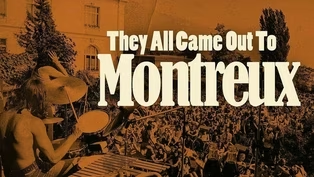
The extraordinary story of the world-famous Montreux Jazz Festival and its visionary founder.
This is the extraordinary story of the world-famous Montreux Jazz Festival and its beloved founder, Claude Nobs. With practically no knowledge of the music industry, Nobs turned a sleepy town near Lake Genevea into a mecca for the greatest recording artists of all time. Featuring Aretha Franklin, Nina Simone, David Bowie, Miles Davis, Prince...the list goes on, and they all came out to Montreux.
Problems playing video? | Closed Captioning Feedback
Problems playing video? | Closed Captioning Feedback
They All Came Out to Montreux is a local public television program presented by WETA
They All Came Out to Montreux
They All Came Out to Montreux
Special | 1h 32m 59sVideo has Closed Captions
This is the extraordinary story of the world-famous Montreux Jazz Festival and its beloved founder, Claude Nobs. With practically no knowledge of the music industry, Nobs turned a sleepy town near Lake Genevea into a mecca for the greatest recording artists of all time. Featuring Aretha Franklin, Nina Simone, David Bowie, Miles Davis, Prince...the list goes on, and they all came out to Montreux.
Problems playing video? | Closed Captioning Feedback
Where to Watch They All Came Out to Montreux
They All Came Out to Montreux is available to stream on pbs.org and the PBS app.
[Jazz playing] Quincy Jones: I refer to Montreux Jazz Festival as the Rolls- Royce of all festivals in the world.
Rolls-Royce.
[Cheering and applause] Jack White: It's the people who really, really love music, you know, coming together.
It starts with that.
The partying is secondary to the music.
Ha!
Wyclef Jean: With Montreux, you're stripped of everything, and the only thing that keeps you radiant is your raw talent.
George Clinton: The Montreux Jazz Festival is that graduation, a special place for musicians that reached that plateau.
I feel so prestigious playing on the same stage as Aretha, Nina Simone, Prince.
[Cheering and applause] Questlove: This festival is the original prestige festival.
All these performances will come out, and people will see that we did something important.
[Band playing "Get on the Good Foot, Pt.
1"] James Brown: ♪ Qué pasa, people ♪♪ ♪ Qué pasa, huh ♪ ♪ Ow!
♪♪ ♪ Get on down, get on down, get on ♪♪ ♪ I want to get on the good foot ♪♪ ♪ Get on the good foot ♪♪ ♪ Get on the good foot, the good foot ♪♪ ♪ Going down to the crib, let it all hang out ♪ ♪ Where soulful people knows what it's about ♪♪ ♪ Going down to the crib and let it all hang out ♪ ♪ Where soulful people knows what it's about ♪♪ ♪ Where people do the sign and take your hands ♪ ♪ And dancin' to the music J.B.
's band ♪ ♪ They're dancing on the good foot ♪♪ ♪ Get on the good foot ♪♪ ♪ Do it with my good foot ♪ ♪ Get on my good foot ♪♪ ♪ 'Cause the long-hair hippies and the afro blacks ♪♪ ♪ They all get together across the tracks ♪♪ ♪ They party ♪ ♪ On the good foot ♪♪ ♪ I'm gonna do it on my good foot ♪ ♪ Dance on the good foot ♪♪ ♪ Get on the good foot ♪♪ ♪ Do it on my good foot ♪ ♪ Get funky ♪♪ [Song ends] [Indistinct chatter] -Al is sneaky -Charlie C.!
Excuse me.
How many tunes has he done?
Do you know?
Man: That's his second tune.
That's his second tune.
Aretha: Do you know how many he's gonna do?
Man: He's gonna do his half an hour.
Aretha: Half an hour?
Man: In fact, I'll go check it.
Aretha: I'm gonna get right in my gown.
♪ Tell me, my sister ♪ ♪ How do you feel?
♪♪ ♪ Tell me, my brother, my brother, my brother ♪ ♪ How do you feel?
♪ ♪ Uh-huh ♪♪ ♪ Do you feel like dancing?
♪♪ ♪ Get up, and let's start dancing ♪♪ ♪ Start getting the spirit ♪♪ Chorus: ♪ Start getting the spirit ♪ Aretha: ♪ Oh, yeah, in the dark ♪♪ Chorus: ♪ In the dark ♪ Aretha: Sing with me!
-♪ It's like Sally Walker ♪ -♪ Do do doot ♪♪ -♪ Sitting in her saucer ♪ -♪ Do do ♪ -♪ That's how you do it ♪ -♪ Do doot doot ♪ ♪ Just come together and do it ♪♪ Chorus: ♪ Do doot doot ♪♪ Aretha: ♪ Ride, Sally, ride ♪ Chorus: ♪ Do do ♪♪ ♪ Put your hands on your hips ♪♪ ♪ Cover your eyes ♪♪ -♪ And move ♪ -♪ Move ♪ ♪ With the spirit ♪♪ -♪ Hey, hey, hey ♪ -♪ Move ♪♪ ♪ With the spirit ♪ -♪ Hey, hey, hey ♪ -♪ Move ♪ ♪ With the spirit ♪♪ -♪ Hey, hey, hey ♪ -♪ Move ♪♪ ♪ With the spirit ♪♪ ♪ Are you getting the spirit?
♪♪ Chorus: ♪ Yeah ♪♪ Aretha: ♪ Getting it in the dark?
♪ Chorus: ♪ Yeah ♪ Aretha: ♪ Are you getting the spirit?
♪ Chorus: ♪ Yeah ♪♪ Aretha: ♪ Are you getting it in the dark?
♪ -♪ Da da da ♪ -♪ Yeah ♪ ♪ People moving ♪ ♪ Oh, oh, oh, oh ♪ ♪ And grooving ♪♪ ♪ Just getting the spirit ♪ Chorus: ♪ Start getting the spirit ♪ Aretha: ♪ Oh, yeah, in the dark ♪♪ Chorus: ♪ In the dark ♪♪ Aretha: ♪ I'm gonna tell you one more ♪♪ -♪ It's like Sally Walker ♪ -♪ Do doot doot ♪♪ -♪ Sitting in her saucer ♪ -♪ Do do ♪♪ -♪ That's how you do it ♪ -♪ Do doot doot ♪♪ ♪ Just come together and do it ♪♪ Chorus: ♪ Do do ♪♪ Aretha: ♪ Ride, Sally, ride ♪ Chorus: ♪ Do doot ♪♪ Aretha: ♪ Put your hands on your hips ♪ ♪ Cover your eyes and move ♪ ♪ With the spirit ♪♪ -♪ Hey, hey, hey ♪ -♪ Move ♪ ♪ With the spirit in the dark ♪♪ Herbie Hancock: The person at the center of this great festival was a crazy guy called Claude Nobs.
He was the Festival's founding father.
[Cheering and applause] [Thumping] Yeah.
Wow.
Buddy Guy: This festival should be named Claude Nobs Montreux Jazz Festival.
[Claude speaks French] Jean: He brought a level of love which was so abundant that it almost felt like a love story, a love story through creation of art.
Claude: I know.
Yes.
Ray Charles: We're gonna have a good time tonight.
[Speaking French] Van Morrison: He was like a walking encyclopedia of jazz and blues, so that's how I connected with Claude.
John McGlaughlin: All he wanted to know was "How much do you care?
"How much do you love music?
How much do you love your life?"
And I think everybody in the end wants the same thing.
We all want love, and we all want that feeling of passion because that's what keeps us alive.
That's the amazing story of Claude.
He made his passion and his love real.
[Claude speaking French] [Cheering and applause] [Boat horn blows] [Boat engine chugging] Michel Ferla: What was quite unique with Claude is that he was born here.
[Women laughing] Stephanie-Aloysia Moretti: Claude is a boy from Montreux.
He's just linked to that area.
Claude: It was like a magic place, games and fun, but I didn't really care about school and about homework.
All this sounded very unnecessary.
I thought I could learn from myself and that all I needed to do was to do what I like to do, and I failed one examination when I was 17 at the high school in Lausanne, and that's why my father decided to get rid of me and said, "You are too lazy.
Tomorrow, you decide what you want to be in life," and I decided to be a cook, so he got me in touch with an old chef and told me, "I have a place for you in Basel."
My big companion was my radio.
I was listening to Europe 1, which was the first free radio.
[Static crackling] [Jazz playing] The studios were in Paris, but the broadcasting tower was in Luxembourg, offline, you know, like a free part of Europe.
I discovered a show, a nightly show called "Pour Ceux Qui Aiment le Jazz," "For Those Who Love Jazz," and being a little kid-- you know, I was 17 years old-- this was my jazz education because they were explaining, you know, about jazz, they were explaining about R&B.
On that radio station, I heard the first Ray Charles, the first John Coltrane, all the first contemporary stuff, and the first Atlantic recording.
That's really where suddenly my favorite label became Atlantic.
It was a liberation.
It was an opening.
It was a window to the world, and it put me in touch with all kind of other people.
I could have carry on being a chef, maybe a pretty good chef, but I wanted to travel.
I wanted to go into the hotel business.
[Whistle blowing] Announcer: Introducing the Swiss Riviera, beautiful playground and haven for millions since first the scenic and climatic wonders of this region were discovered.
Breathtaking mountain panorama faces the peaceful resort town of Montreux, where all the advantages of a modern city are coupled with the delights of a quiet vacation spot.
It's the Swiss Riviera.
Happy holiday home!
Ferla: When he came back to Montreux, he met a gentleman called Raymond Jaussi, who we have to give some credit for everything because he was the man who did the renaissance of Montreux.
His career was actually a military career in the Swiss Army, and then he became member of the Montreux Tourist Office.
Claude: Mr.
Jaussi saw what I was doing and said, "Is this what you want to do in your life?
"You have a background in hotel management, and now you know about the banking system," and he said, "Well, I have a job for you.
"Yeah.
You can be the accountant at the Tourist Office in Montreux."
Michaela Maiterth: He had this instinct, and Claude really, really was so thankful to him to having given him his chance.
Claude's mentor really.
Ferla: When he started here, people thought, "Oh, Montreux beautiful but so boring."
[Gulls crying] Thierry Amsallem: It was full at the time of old English ladies coming to retire.
It was very quiet, so he wanted to shake this place.
Keith Richards: Montreux, you know, I mean, it's a--it's a funny town.
I think that's maybe why Claude shone out so brightly because he was, for me, an island of culture in an otherwise fairly barren place.
I thought he would have outgrown it or wanted to outgrow it, but instead, he made it grow up around him, you know?
Heh heh heh!
Ferla: Claude had in his head, "You know, we should do something with jazz," and he thought "We should do a jazz festival," So he went to Jaussi and said, "Why don't we do that?"
And Jaussi said to him, "Well, look, end of June, "beginning of July, we have space in our hotels, "and, you know, we could do something there.
I'll give you 10,000 Swiss Francs."
[Horns honking] Claude went to America because we knew that America had so much music potential.
Marcus Miller: Claude Nobs, I mean, it's incredible when you think about it.
He decided that he wanted to have a jazz festival in this little tiny town in Switzerland, and he got on a plane and had to pitch this festival.
I don't know how he did it.
Amsallem: With Claude, it was maybe naive, but it was the heart speaking.
You act like you feel.
You don't explain.
You just do.
Ha ha ha!
Ferla: He went to Atlantic Records, and he says to the secretary, "I need to see Mr.
Nesuhi Ertegun," And the secretary said to him, "But you don't have a meeting.
I can't disturb him," and he says, "But I came all the way from Switzerland to see him."
Ertegun's door was open, and he heard this gentleman speaking this French English, and then he came out and he says, "Grüezi," which means hello in Swiss German.
Nesuhi Ertegun was the son of the Ambassador of Turkey in Bern, and he spoke German, so there was this immediate relationship.
George Wein: Atlantic Records became involved with Montreux.
They loved Claude, and they made it possible for their artists to go.
Ferla: Nesuhi Ertegun was very visionary and had this wonderful way to be with the artist, and Nesuhi saw in Montreux an extraordinary European platform for the artists.
Jaquelyne Ledent-Vilain: And when you think about it, I mean, here is this little kid who certainly didn't know anybody in this business, who put his town really on the map.
It's mind-boggling when you think about it.
Bravo I say.
The rest is history.
[Piano playing "Compared to What"] [Cheering and applause] Uh-huh.
Yeah!
♪ I love the lie and lie the love ♪ ♪ A-hangin' on, we push and shove ♪♪ ♪ Possession is the motivation ♪♪ ♪ That is hanging up the goddamn nation ♪♪ ♪ Looks like we always end up in a rut ♪ ♪ Everybody now trying to make it real ♪ ♪ Compared to what?
♪ ♪ Come on, baby, come on ♪ [Song continues] [Song continues] [Song continues] ♪ Trying to make it real ♪ ♪ Compared to what?
♪♪ [Cheering and applause] [Gong] [Cheering and applause] [Band playing jazz] Wein: Claude had to overcome so many obstacles that it was a miracle that he could hold a festival in a place like Montreux.
He was a rather enterprising young man and figured out what to do.
Jazz musicians loved going to Europe.
They loved going to Montreux.
Europe had a better relationship over the years to African-American musicians.
They felt very comfortable in Europe.
Europe was not perfect in any respect, but it was certainly better.
[Piano playing] [Paying "The Sound of Silence"] Hmm.
Very close, isn't it?
Thanks very much.
Thank you for being so generous and kind.
-Thanks again.
-Our great, great pleasure.
-I come with you.
-All right.
I'm holding him up.
OK.
See you, gentlemen.
You can go to dinner now.
[Laughter] [Playing "Give Me the Simple Life"] ♪ I don't believe in fretting of grieving ♪ ♪ Why mess around with strife?
♪♪ ♪ I never was cut out to step and strut out ♪♪ ♪ Give me the simple life ♪♪ ♪ Some find it pleasant dining on pheasant ♪♪ ♪ Those things roll off my knife ♪ ♪ Just serve me tomatoes and mashed potatoes ♪♪ ♪ Give me the simple life ♪♪ ♪ A cottage small is all I'm after ♪♪ ♪ Not one that's spacious and wide ♪♪ ♪ A home that's full of joy and laughter ♪♪ ♪ And the ones you loved inside ♪ ♪ Some like the high road ♪♪ ♪ I'll take the low road ♪ ♪ Free from the grief and strife ♪♪ ♪ Sounds corny and seedy, but, yes, indeedy ♪♪ ♪ Give me the simple life ♪♪ [Scat singing] ♪ I never was cut out to step and strut out ♪♪ ♪ Give me the simple life ♪♪ ♪ Just serve me tomatoes and mashed potatoes ♪ ♪ Give me the simple life ♪♪ ♪ A cottage small is all I'm after ♪♪ ♪ Not one that's spacious and wide ♪♪ ♪ A home that's full of joy and laughter ♪♪ ♪ The ones you love-ove-ove inside ♪ ♪ Some like the high road, I'll take the low road ♪♪ ♪ Free from the grief and strife ♪ ♪ Sounds corny and seedy ♪ ♪ But, yes, indeedy ♪ ♪ Give me ♪♪ ♪ The, the, the, the, the ♪♪ ♪ The si-imp-imp-imple ♪♪ ♪ Da da da imple life ♪ [Cheering and applause] Thank you!
[Drums playing] Oof!
[Speaking French] [Cheering and applause] Marc Myers: By the late 1960s, rock was eclipsing all other forms of popular music.
Sting: Opening the Festival out to rock bands and away from the purity of jazz, I think, was a very important statement to make.
Music grows, it evolves as a living organism.
Good music is good music.
Miller: Claude wasn't afraid to invite people who weren't jazz at all, but they had a musical integrity that allowed Claude to feel like, "You know what?
these people belong on this stage, too."
Ferla: The jazz people used to have a little table with a little champagne glass, you know, this kind of old style, and then Claude basically responded actually to what the youth of that generation wanted, and that's how the Jazz Festival became different from others, and that was a revolution.
[Vocalists holding note, saxophone playing] I remember that we had thousands of tents in the garden where people would come and sleep in those tents.
Claude: They could sleep in the garden.
Nobody would bother them.
They would leave in the morning because of the police guy would come and say, you know, "If you don't leave, "then you may be peed on by the dogs while taking their early walk."
[Saxophone and drums playing] Ferla: This was our generation, and we were certainly a bit crazy and maybe a bit naive.
Everybody was sitting down, smoking their dope and what have you, but that was the beginning was kind--ha ha-- this bruhaha of people coming from everywhere.
Claude: Suddenly, Montreux became the mecca of pop and rock in Switzerland.
Suddenly, we had people coming from Rome, from Berlin, from Scandinavia, because they were a unique show.
That was the only way in the small setting to see those big groups.
Carlos Santana: We had just done Woodstock, and so everything we saw in Woodstock was an affirmation that humans can and will coexist together with unity and harmony.
Being at Montreux Jazz Festival in 1970, I couldn't believe they had so many different kind of bands, and just walking around looking at the mountains and the lake and everything, it was like being inside of a dream, but you're awake.
[Playing "Persuasion"] Greg Rollie: Ow!
♪ You got persuasion ♪ ♪ I can't help myself ♪ ♪ You got persuasion ♪♪ ♪ And I can't help myself ♪ ♪ Something about you, baby ♪♪ ♪ Keep me from going to somebody else ♪♪ ♪ Ow, the way you walk now, now, baby ♪ ♪ You put me in a daze all the time ♪♪ ♪ Look what you got for me, baby ♪ ♪ Like the devil in disguise ♪♪ ♪ Something about you, baby ♪♪ ♪ You're one, you're one of a kind ♪♪ ♪ Ah, yeah, yeah, yeah ♪♪ Yeah.
All right!
♪ Oww ♪ [Cheering and applause] [Organ and saxophone playing] [Sharp tapping] Roberta Flack: You know, all the way through you can't feel the backbeat.
[Indistinct] Maybe some kind of something after the beat.
Man: OK.
Flack: 1, 2, unh.
[Playing "Ain't No Mountain High Enough"] [Stomping foot] It just needs to feel strong.
♪ Ba bing ba ♪♪ ♪ Ba ba ba ba ♪ I think that's what it is.
Hancock: Claude's heart was in taking chances, and he cultivated an audience that supported that.
He wanted to share his joy and help them to feel what he has felt all his life about this music.
He worshiped the lifeforce of the artist that's making that music.
His passion was deep.
I mean, he loved music.
He loved musicians to the death.
His whole life, his existence revolved around the Festival.
[Cheering and applause] Ian Gillan: ♪ I bet you have ♪ ♪ And you've not been hit ♪♪ ♪ You've not been hit by flying lead ♪ ♪ You better close your eyes ♪♪ ♪ Ohh ♪♪ ♪ Bow your head ♪♪ ♪ Wait for the ricochet ♪♪ ♪ Ooh, ooh ♪♪ We first came to Montreux on the regular circuit.
If you were playing any tour of Europe, chances are you'd play the Montreux Casino.
Ian Paice: We hated studios at the time.
We just didn't like the sound we were getting in studios.
Glover: We'd looked around for a live setting, and the casino came up, and it was available.
Claude Nobs, who ran it, said, "Yeah, you can have that.
There's no one coming in," and so that was the arrangement.
We had the Rolling Stones' mobile truck, and it arrived here, and we all arrived here, and he said, "Actually, there's one more gig to go "before you can start moving your gear in, "and that's a Frank Zappa gig, which is tomorrow afternoon, 3:00 matinee performance."
Paice: This guy came in right over my right shoulder.
Two flares like Roman candles.
[Pop, whoosh] The flare gun just went into the trunking in the back of the building.
Seemed to fizzle out, but then they caught fire.
That was it.
That was the venue gone.
We went down the lake to the Eden Au Lac Hotel and watched the wind from the mountains blowing the flames and smoke.
[People shouting, flames crackling] Glover: The shock of this whole place burning down was pretty amazing.
I mean, that was Claude's life going up in flames.
I woke up one morning in the hotel.
I said the words out loud, "Smoke on the water.
Let's write the story of how we made the album."
[Deep Purple's "Smoke on the Water" playing] Gillan: ♪ We all came out to Montreux ♪ ♪ On the Lake Geneva shoreline ♪♪ ♪ To make records with a mobile ♪♪ ♪ We didn't have much time ♪ ♪ But Frank Zappa and the Mothers ♪♪ ♪ Were at the best place around ♪♪ ♪ But some stupid with a flare gun ♪♪ ♪ Burned the place to the ground ♪♪ ♪ Smoke on the water ♪ ♪ Fire in the sky ♪♪ ♪ Smoke on the water ♪ [Song fades] Claude: I had the protection of Mr.
Jaussi, you know, even when the casino went on fire.
A lot of people were against me.
He stood beside me even with the mayor.
[Jaussi speaking French] Claude: Mr.
Jaussi would go and fight for me, and he was running the town.
Who would fight against him?
It was our playground, and he would put the money in the Jazz Festival to develop Montreux.
This is the first time that I've played anywhere outside the United States ever, and it's really a gas.
I love it.
[Cheering and applause] Thank you.
[Playing "You've Got a Friend"] [Cheering and applause] ♪ When you're down and troubled ♪ ♪ And you need some love and care ♪♪ ♪ And nothing, oh, nothing is going right ♪ ♪ Close your eyes and think of me ♪ ♪ And soon I will be there ♪♪ ♪ To brighten up even your darkest night ♪ ♪ You just call out my name ♪ ♪ And you know wherever I am ♪ ♪ I'll come running ♪ ♪ To see you again ♪ ♪ Winter, spring, summer, or fall ♪ ♪ All you have to do is call ♪ ♪ And I'll be there, yeah, yeah, yeah ♪♪ ♪ You've got a friend ♪♪ [Cheering and applause] Thank you.
Ferla: The casino was rebuilt within 3 years with one innovation that Claude had again.
We should have a recording studio.
From the start, Claude was a record man.
Claude recorded and taped every show, so it had that aura and reach that other festivals didn't have.
Vicky Vocat: Claude encouraged a lot of artists to come and record, persuaded then the record companies that they should also encourage and send the artists to Montreux because it was a quiet place.
They weren't going to be disturbed by press.
Justin Shirley Smith: The first act that came was the Rolling Stones, which wasn't a bad starting point.
Richards: I was living straight up the mountain from Montreux.
I really couldn't at that point leave Switzerland.
Ian Stewart, the piano player from the Rolling Stones, got me in touch with Claude, who was like an oasis of culture.
Lo and behold, the stones came to Mountain Studios.
I think we broke that studio in, which is a great room.
Smith: Queen came in, as well, and David Bowie moved into the area to live.
He was often in.
AC/DC came to do an album.
That was fun.
Ha!
Michael Cuscuna: Claude realized early on that one of the ways to put Montreux on the map was to create live albums from the Festival.
Then the name Montreux would be sitting in record bins around the world.
Myers: Nobody knew where Montreux was.
Most people thought it was a ski resort.
Albums are turning up in the United States that say, "Bill Evans at Montreux."
Claude: Bill Evans, he recorded with the trio with Jack DeJohnette, and the recording was released in America and got a Grammy Award, which was the first time a jazz record recorded outside America got an award, and the jacket had a big color picture of the Castle of Chillon.
All the record shops around the world suddenly had the name Montreux.
Miller: As I was coming up, there were already a couple of really famous live in Montreux albums.
We began to go, you know, "What is this place, and where is it?"
We had no idea where it was, we had no idea what it was, but we knew that the music was awesome.
"Mon-trex."
We didn't know how to say it.
Ha ha ha!
Myers: It's creating a mystique in the United States.
"What is this Montreux place?
What is this castle?"
So the jazz fans here, you know, their ears perked up, and they were equating Montreux with elegance and top-level jazz.
John Schofield: Everybody was talking about it.
I just woke up in the morning, and I looked out at the lake and at the mountains.
I couldn't believe I was here.
At that point, the old guys were still around.
I got to hear some of the old jazz greats that were here from the older generation.
I mean, it was one thing playing in New York, and then to come to Montreux, it blew my mind.
Nathan East: There's something about loading in to a place like that where you're almost walking through the audience to get to the stage, you know, and it's little and funky.
You really, really get the intimacy of what the music is about in a venue like that, and the little casino like that, it was just always magical.
You could see, touch, feel, taste, and all the senses were stimulated.
To this day, those are some of the most exciting and fun times I've ever had playing.
[Percussion playing] Amsallem: The casino experience, that was pure magic.
A lot of freedom, a lot of improvisation.
Claudes job was to make the relation between the audience and the artist.
[Cheering and applause] The artist was able to play in front of real lovers of their music.
I saw so many people where the music is their second skin.
Claude always preferred to tell the artists "I give you carte blanche" because when the artists are touring, they play the same thing in each city, but Claude wanted something very exclusive.
Claude: I never wanted Montreux to be just a stopover on a circuit of tours or, you know, different festivals that artists would do around Europe.
I tried to get the artists to stay for more than one day, possibly 2 or 3 days.
They found that, you know, it was a relaxing place, it was a different atmosphere than big cities.
[Indistinct chatter] Richards: Claude became like an oasis for me, going to Claude's library and just look through the record collection and play Meade "Lux" Lewis, you name it.
Blues, especially piano blues, boogie-woogie and barrelhouse piano blues, which was incredible.
I think that his love for that was the fulcrum of everything that he did.
That was his thing, man.
Muddy and Buddy Guy, they loved playing Europe, but I've no doubt it was an uphill struggle in places for Claude to actually get them there and bring people that would never have been heard otherwise.
He did a hell of a job, you know.
Ha ha!
Claude: Those old blues guys had something from the balls, from their blood, from their whatever, which is unique.
When you hear a Jimmy Reed or Howlin' Wolf or Sonny Boy Williamson or those guys, it's something that nobody has ever been able to copy.
[Cheering and applause] [Playing "Got My Mojo Working"] ♪ I got a gypsy woman giving me advice ♪ ♪ I got a gypsy woman giving me advice ♪ ♪ I got a whole lot of tricks keepin' her around ♪ ♪ I'm going down to Louisiana ♪ ♪ To get me a mojo hand ♪♪ ♪ I'm going down to Louisiana ♪ ♪ To get me a mojo hand ♪♪ ♪ I'm gonna have all you women ♪ ♪ Right under my command ♪♪ ♪ Got my mojo working ♪ Man: ♪ Got my mojo working ♪♪ Waters: ♪ Got my mojo working ♪ Man: ♪ Got my mojo working ♪♪ Waters: ♪ Got my mojo working ♪♪ Man: ♪ Got my mojo working ♪♪ Waters: ♪ Got my mojo working ♪ Man: ♪ Got my mojo working ♪♪ Waters: ♪ Got my mojo working ♪♪ ♪ But it just don't work on you ♪♪ [Song ends] [Brass band playing] McLaughlin: Claude had a vision, and he lived by it.
This passion that he had for music was the heart of the Montreux Festival.
You have this sense of freedom and liberty which affects the entire town.
Woman: Où allez-vous?
Man: Je vais à Montreux.
Maiterth: When you have all these wild hippies hanging out in sleeping bags on this lakeside, it was a bit hard to take at first, so that was a bit of a culture clash.
Hashish and LSD, and the image was really shocking.
People were not necessarily happy about that.
Ian Anderson: Anybody who had any criticism of Claude-- and there were probably plenty who did, it was either born out of jealousy or the fact that there were always going to be people who didn't want their town overpopulated for a couple of weeks of crazy time.
Mathieu Jaton: Claude is not representing the Swiss culture of behavior because he was too much.
Moretti: Claude knew since the beginning that he was not going to be the friend of everyone in the area.
Claude: When we opened the new convention center, two guys came to me and said, "Mr.
Nobs, follow us."
They had a police car, and they showed me a pink paper saying, "You're under arrest."
Said, "What for?
What did I do wrong?"
"Why, you had an affair with some younger guys."
Said, "What do you mean younger guys?"
Said, "Yeah, they were not 20."
[Typewriter clacking] Cuscuna: Claude, being gay was vulnerable to being set up with a rendezvous in a hotel, and then, you know, a detective and a photographer burst in, and then that was the scandal that the elders in Montreux perpetuated.
Claude: Some people find out that I was gay, but I was very much, you know, still hiding.
I don't go to parade.
I'm what I am, and that's the way I am, and that's it.
[Siren] They said, "You're under arrest.
You have to go to prison," and you know, in Switzerland, unless you could prove that you are innocent, they could put you in jail as long as they wanted, and they take my clothes away, and they give me a toothbrush, and they give me a razor to commit suicide.
In the meantime, in Montreux, people heard about it because all the newspaper headline was "The Pope of Rock Arrested" all over Switzerland, all around the world, and there was a petition circulating in Montreux signed by hundreds of people to free me.
This is bullshit.
The day I got freed, Ahmet calls me.
Said, "Claude, Fuck all of this, you know.
"You come and work for us.
We want you.
"We don't give a shit who you sleep with, you know?
"I mean, that's your affair.
So just split from Montreux, come and work with us"... and I was very touched, and I said, "No."
I just wanted to carry on to show that, uh, you know, my private life's my private life.
It's my affair.
Moretti: Claude being gay at that time, that was very complicated, but of course, he could have escaped and just lived in a big city.
The love of his hometown was stronger than that, and he decided to stay.
Ledent-Vilain: He could have gone and worked anywhere in the world, that's for sure.
In '73 when Nesuhi said, "We would like to have somebody represent WEA in Europe," he made it as a condition that, yeah, he would do it, but it would have to be in Montreux.
Ferla: Claude--of course, he had his own ego, which is normal, but he really did this for the town where he was born.
Monty Alexander: There is Claude Nobs.
One in a million.
One in a million, but just being around him, he was really a man who had his own way of looking at life.
[Claude speaking French] Au revoir.
Ciao.
Merci.
-Jaquie.
-Yes?
Do you think Barclays changed number in Geneva?
-Sorry?
-Barclays.
They changed number in Geneva?
Ledent-Vilain: Claude will always stay somebody who opened a whole different world for me.
Was it easy to work with him?
Certainly not .
If you made the mistake to be afraid of him, boy, he would eat you alive and spit the bones for breakfast.
One thing I learned extremely quickly once I started working with Claude-- there was one word you just could not use, and that was.
"No, it's not possible."
"What do you mean it's not possible?
Everything is possible."
Because he had that enthusiasm, I mean, he would sweep you off your feet.
Maiterth: It was a big challenge to work for him because he was very demanding, and he had no limits.
You know, for him it was everything is possible, and that was his, uh, sort of mantra, and he just went for it.
Claude loved chaos because it's an adventure.
I'm sure he was astonished himself sometimes that it actually worked out.
Ha ha ha!
Music first, a good concert.
That was his first aim.
Claude: Etta James!
the first time in Europe Etta James!
[Cheering and applause] james: Hi.
Audience: Hi!
James: Hi!
Audience: Hi!
James: I can't hear you.
Hi!
Audience: Hi!
James: All right.
[Band playing "Respect Yourself"] ♪ If you disrespect everybody that you run into ♪ ♪ Yeah ♪♪ ♪ How in the world do you expect ♪ ♪ Anybody to respect you?
♪♪ ♪ When you don't give a damn ♪ ♪ About the man with the Bible in his hand ♪♪ ♪ Just get out of here ♪ ♪ And let the gentleman do his thing ♪♪ ♪ Respect yourself ♪ ♪ Respect yourself ♪ ♪ Respect yourself, yeah ♪ ♪ Oh, yeah ♪♪ ♪ Oh, respect yourself ♪♪ ♪ If you don't respect yourself ♪ ♪ Ain't nobody gonna give a good goddamn ♪ ♪ No, no, no, no ♪♪ ♪ Talk about the president ♪ ♪ He won't stop the air pollution ♪♪ ♪ Put your hand over mouth when you cough ♪ ♪ That'll help the solution ♪ ♪ Don't give a good goddamn ♪ ♪ About the man with the Bible in his hand ♪♪ ♪ Oh, oh, huh ♪♪ ♪ Just get out the way ♪♪ ♪ And let the gentleman do his thing ♪♪ ♪ Respect yourself ♪ ♪ Respect yourself ♪ ♪ Respect yourself ♪ ♪ Respect yourself ♪ ♪ If you don't respect yourself ♪ ♪ Ain't nobody gonna give a good goddamn ♪♪ ♪ No, no, no, no ♪♪ [Cheering and applause] [Indistinct chatter] Miller: When you went to Montreux, you realized that you were part of this enormous community, and all of your little preconceptions about race, you had to let them go and just really enjoy the mixing of cultures.
[Gil speaking Portuguese] [Playing "Chuck Berry Fields Forever"] ♪ From Africa to both the Americas ♪ ♪ North and Latin ♪♪ ♪ A jungle drum was brought ♪ ♪ And got the white god to get in ♪♪ ♪ A pagan dance until He had no other chance ♪ ♪ Unless the sin, yes, the sin ♪♪ ♪ A black and white day and night ♪ ♪ Soul and mind magic ♪♪ Whoo!
♪ The European goddess fainted ♪ ♪ Under jungle drum's sound ♪ Yes, it very good.
♪ She was fertilized by some Afro gods ♪♪ ♪ While on the ground ♪♪ ♪ So they begot the terms of samba, mambo, rumba ♪ ♪ Rhythm 'n' blues ♪ ♪ Ahh ♪♪ ♪ Became the ancestors of what today ♪ ♪ We call rock 'n' roll ♪♪ ♪ Rock 'n' roll is magic, baby ♪♪ ♪ Rock 'n' roll is mixture ♪♪ Santana: The Montreux Jazz Festival was like a laboratory where people create alchemy, create miracles and blessings before your eyes.
Claude was Merlin.
He was the Merlin of jazz festivals.
Jones: I think that it's great to dip into each other's nationalistic reservoirs and appreciate the differences in each other.
People socially and creatively like to come together to mingle and merge to diversified cultures, you know, and that's what's great about it.
It's all gumbo.
I call it global gumbo.
Everybody in the world wants to play this festival.
It's just the most amazing evolution I've ever seen.
End result is the audience being happy, the artists being happy, and get this sort of great, you know, atmosphere, which is very unique to Montreux.
There's no security around it, no barrier.
It's not like those rock 'n' roll and roll thing where the artist is like in a cage onstage, and the audience is way back.
It's like a real big club, and it has to be a festival.
It has to be a big fiesta.
[Singing in Yoruba] Claude: Give the creativity to the art.
That's my deepest respect is the artist, that they have a place which is not just a gig on a set around Europe or around the world, and they can expand and do different things and invite friends, say, "Come on, come with me, and we'll do something together," and it's not with the idea that they are going to do a masterpiece immediately, but maybe it's going to happen, and when Queen was living in Montreux and David Bowie, also, I did a dinner at my house one day, a barbecue, and at midnight I said, "Why don't you go to Mountain Studio and do something together?"
Said, "What do you mean?
What?"
"Well, you are here.
Just go and do some work."
They went to the studio, and they came back two hours later and said, "OK, we did it."
"What is this?"
"'Under Pressure'" Bowie: ♪ Pressure, pushing down on me ♪♪ ♪ Pressing down on you ♪♪ ♪ No man ask for ♪ ♪ Under pressure ♪♪ Bigot: A meeting of the minds is the exact way of saying what Montreux was.
Musicians stayed for 5 days sometimes just because they loved the place so much.
It's a beautiful scenery.
The artists could be amongst themselves.
You wanted to spend time there, and you had time to get acquainted.
Ledent-Vilain: Claude would be more than happy to have them for dinner or lunch.
We would take them up in the mountains.
You know, it was just like sharing, and when you have that kind of relation with artists, you trust each other.
It gave us that very special possibility of meeting them in a total different way.
I remember one evening we were having dinner at Claude's place, just, you know, a couple of us.
The door rang, so, you know, I went to open the door, and there was Van Morrison with his girlfriend.
They had decided to go on holiday in Switzerland, and of course if you go to Switzerland, you go and say hello to Claude.
[Morrison's "Foggy Mountain Top" playing] Morrison: He was like a walking encyclopedia of jazz and blues, so that's how I connected with Claude.
I was kind of burnt out, so I was just taking a break.
I think Montreux was the only gig that I had booked.
At that point, I didn't have a band.
There were other musicians there who sort of came to the rescue, Pete Wingfield and Jerome Rimson and Dallas Taylor, so that's how that came together, and we had a bit of a rehearsal and then did the gig in the evening.
♪ I'm kicking off from centerfield ♪♪ ♪ A question of being down down for the game ♪ ♪ One-shot deal don't matter ♪ ♪ The other ones are all same ♪ ♪ Oh, my friend, I see you ♪ ♪ Want you to come through ♪ ♪ And they're standing in the shadows ♪ ♪ Where the streetlights all turn blue ♪♪ ♪ Leaving Pan-American ♪ ♪ Suitcase in her hand ♪ ♪ Her brothers and her sisters ♪ ♪ They're all on Atlantic sand ♪ ♪ Well, she's screaming through the alleyway ♪ ♪ I hear the lonely cry, why can't you?
♪ ♪ And her batteries are corroded ♪ ♪ And her hundred-watt bulb just blue ♪ ♪ La la la la la la ♪ ♪ Hey, hey, hey ♪♪ ♪ La la la la la ♪♪ Ferla: First, he had a very little apartment in Territet, but there were extraordinary parties there.
Then he bought a little chalet up in Caux.
Ledent-Vilain: When he bought the chalet, it was not for him.
It was to share.
That's all it was about.
[Indistinct chatter] [Laughter] Anderson: He built his new chalet, not even 100 meters away from the old chalet, but the old chalet became the archive and the museum, and Claude's new chalet became his private home.
Part of his joy really was to show off his chalet and his collection of stuff.
Carl Craig: We'd go downstairs to where the record archives are.
You know, he has his big bank vault kind of things that move back and forth.
He was able to tell those personal stories.
Clinton: Claude's catalogue of videos and recordings had to be one of the greatest treasures of all time.
White: The great thing is the open mindedness all the way to this generation now, the new waves and the punk rock and all these different genres that have happened in the last 20 years that Claude was also open to.
Incredible.
Shanaia Twain: Thanks to Claude, we have these remarkable archives.
Invaluable.
That is a gift.
It is a gift to all of us.
Elvis Costello: And the archive represents a passage of musical culture, some of which doesn't exist anymore.
It only exists on that tape.
The legacy is in the performances.
By having the audio and video of the concert, we can share it with the world.
The toughest one was Marvin Gaye because he said, "I never did a live television.
I would never do one," so finally, I showed him some earlier show from Montreux from Nina Simone, Aretha Franklin, and he said, "Wow!
This is great way of shooting a concert," and he signed the contract.
[Playing "Let's Get it On"] ♪ I been really trying, baby, whoo ♪ ♪ Trying to hold back this feeling for so long ♪ ♪ And if you feel ♪ ♪ Like I feel, baby ♪♪ ♪ Then come on ♪ ♪ Ohh, come on ♪♪ ♪ Hoo, let's get it on ♪ ♪ Mmm, ow, ooh ♪♪ ♪ Let's get it on ♪ ♪ Let's love, baby ♪♪ ♪ Let's get it on, on ♪♪ ♪ Sugar ♪♪ ♪ Let's get it on ♪♪ ♪ Oh, baby, ooh ♪ ♪ We're all sensitive people ♪♪ ♪ With so much to give ♪♪ ♪ Understand me, sugar ♪♪ ♪ Ooh, ooh ♪♪ ♪ Since we got to be there ♪ ♪ Let's live ♪ [Continues faintly] ♪ I love you, oh ♪♪ ♪ Let's ♪♪ [Song fades] Bigot: Claude Nobs that this very, very interesting vision from day one saying that those artists, they are the Picassos, they are the Shakespeares of music, and it's got to be preserved for generations to come... so from day one of the Festival, he wanted to tape, to record, to film those artists to spread the word worldwide.
He wanted people to love this music so much because he knew.
He knew that he was living through a special time in the history of art.
Miller: Just being on that stage really connected you with literally the history of jazz.
As an American, I could really connect to my whole musical history by being in Montreux.
This festival was so important in terms of illustrating the through line.
Glover: 200 years', 300 years' time from now or 1,000 years' time from now, that'll still be somewhat of a holy grail for musicians and everyone that's interested in music.
It's a staggering collection, staggering.
Cuscuna: Claude was always a fan of technology and a fan of media, but I highly doubt that he could plug in a computer and get it rolling.
Thierry Amsallem began working with Claude.
He became really the keeper of the kingdom.
Amsallem: I met Claude in the eighties.
The first time I met him, it made electricity, you know, and then I left with him to Montreux directly with no toothbrush.
I spent my adult life with Claude and of course all the musicians around him.
I understood his message to share with an audience and to preserve this memory.
He was loving music, and I was loving technology.
In '87, the first job was to build the bunker, the archive.
Claude: I was able to buy from the Swiss TV the entire archive, and after that, with my partner, we were able to keep all the tapes, which otherwise would have been just lost, and so a huge part of the history of music would be lost.
I came to a point where I said, "It has to be digitalized."
Amsallem: He understood that I was able to bring computer inside the story.
He was always trying to get the best technology to record.
Claude: '68 was done in black and white.
We have a few glimpse of '68.
'69 we have Ella Fitzgerald and Les McCann.
We have two major concerts well protected in black and white.
‘71 is we start in color, and I have all the important shows, Aretha and Roberta and all those guys.
From that on, I have everything.
♪ The sun died ♪ [Applause] ♪ The sun died with my love ♪ ♪ And I'm all alone ♪♪ Oh, it's just so beautiful, these songs.
I love all of them.
I wish I could play every song like that.
Man: We love you!
Charles: Do you?
♪ I know ♪ Oh, it's so pretty.
♪ She said, "My son, I beg of you" ♪ ♪ "I have a wish that must come true" ♪♪ ♪ "The last thing you can do" ♪ ♪ "For your mama" ♪♪ Charles Aznavour said.
♪ "Please promise me that you will stay" ♪♪ ♪ "And take my place when I'm away" ♪♪ ♪ "And give the children love each day" ♪♪ ♪ I had to cry ♪ ♪ What could I say?
♪ ♪ What could I say?
♪ ♪ I tried so hard to find a word ♪♪ ♪ I prayed she would not see me cry ♪♪ ♪ So much to say that should be heard ♪♪ ♪ But only time to say goodbye ♪ ♪ To my mama ♪♪ ♪ Lord, my ma, my mama ♪♪ [Playing up-tempo rhythm] [Audience clapping along] ♪ Everything's all right ♪ ♪ Everything's all right ♪♪ ♪ Everything's all right, all right ♪ ♪ It's all right with me ♪♪ ♪ Hey, there, everything's all right ♪♪ ♪ Oh, God ♪♪ ♪ Everything's all right ♪ ♪ Everything's all right ♪♪ ♪ Oh, oh, it's all right, yeah ♪♪ [Cheering and applause] Claude: Ray Charles!
Ray Charles!
The one and only Ray Charles!
[Cheering and applause] [Band playing jazz] Claude: I met Quincy through Nesuhi Ertegun.
Of course, he knew that I was doing a festival, that I had a bunch of people that he was very close to, and one day he called me and said, "I'm in Moscow.
"I just finished the last album with Michael Jackson.
"I want to come to Montreux to one of those spa clinics to get healthy, et cetera."
So I go pick him up at the airport.
We go to the hotel, and I had in his room a complete set of videocassette of the previous Jazz Festival, and he checked all the tapes from A to Z. He said, "You know, one day if you need me, I'd love to work with you."
Well, we start in 1991 a 3-years collaboration.
Maiterth: Claude's dream was to work with Quincy Jones, and when he said yes, I mean, you had to fetch him from the moon, you know.
Ha ha ha!
Hancock: Quincy was, like, the perfect twin for him to have in a way.
Their new ideas were a match.
Their willingness to support whatever might sound a little farfetched or a little crazy to other people, they would go for it.
[Cheering and applause] Claude: One of the big highlights was a concert with Miles Davis doing the Gil Evans arrangement that he refused for many, many years to do because he said, "I don't want to do the old stuff.
I only play my new stuff," and Quincy said, "We have to get Miles to do it," so we went to see Miles in New York.
We have this meeting in his house.
Quincy gave him the list of the songs, so Miles said to Quincy, "It's going to be incredibly expensive."
And Quincy said, "Why?
Everything is written.
Every note is written down."
And Miles said, "Yeah, that's why.
I have to play every note!"
Ha ha ha!
Claude: The high shoulder.
Woman: You need me for your clothes, Claude?
Claude: Uh, no.
I think it's really together, and I think there is a--yep.
[Speaks French] Davis: Got enough, Claude.
Come on now.
You make me feel bad.
Claude: But I feel good I can share it because I have too many.
But it's nice, huh?
It's a different-- different kind of cut.
It's a great shoulder.
This is really nice.
Really nice.
Davis: Tell me if I was on the corner and you were a lady, would you stop?
-You would.
-I would.
I would.
[Davis playing trumpet] [Cheering and applause] [Playing "Summertime"] [Cheering and applause] Ferla: Quincy Jones comes and brings tons of new artists that nobody knew, new sounds.
The spectrum of Quincy from Ella Fitzgerald to Michael Jackson and hip-hop and all is so extraordinary.
We lost money on all of these things, but at the end, it gave a new wind to the Montreux Jazz Festival.
[Sting humming] [Playing jazz] Sting: ♪ Hey ♪ ♪ Here we go ♪ ♪ Whoo ♪♪ [Playing "Walking on the Moon"] [Cheering and applause] ♪ Giant steps are what you take ♪ ♪ Walking on the moon, yeah ♪♪ ♪ I hope my leg don't break ♪ ♪ Walking on the moon ♪♪ ♪ We could run forever ♪ ♪ Walking on the moon, yeah ♪♪ ♪ We could live together ♪ ♪ Walking on, walking on the moon ♪♪ ♪ Ohh ♪ ♪ Hey, now ♪♪ ♪ Walking back from your house ♪ ♪ Walking on the moon, yeah ♪♪ ♪ Walking back from your house ♪♪ ♪ Walking on the moon ♪♪ ♪ My feet don't hardly touch the ground ♪ ♪ Walking on the moon, yeah ♪♪ [Cheering and applause] Bigot: The Quincy Jones years, they were obviously very prestigious, but they also put the Montreux Festival in big financial trouble, spending much more money than it was earning.
It led Claude to get back from the red and into the black, and he had to make some huge changes.
The economy that goes with the Festival, it went along with the times, and the new site of the Festival at the Stravinski Hall was very much part of that.
McLaughlin: When it's that big, it's difficult for one man to control everything.
Claude: To get the hall running, you need people, and you need a lot of people.
When I started in 1967, there were 2 or 3 friends with me.
I was doing the cooking getting the people at the airport, trying to fix the light, the microphone.
Everything was going wrong.
Everything was going late.
Bobby Liiser: He would never have accepted the change.
I mean, he was very stubborn.
Jaton: I knew he was frustrated how the music business was changing, especially that human factor of the music business that he was fighting for, the link with the artists, making great music, talking about what kind of concert we can create which could be totally different from all the other concerts.
He knew that the world was changing.
There was something very painful for Claude.
That was his life.
Passion for the musician, the love he has for the musician.
Ledent-Vilain: I always said I worked 35 years for a record company.
For half of it in the expression "music business," "music" was the important word, and then business became the important word... and when lawyers came about, we had some situation where I thought, "Oh, thank God Claude isn't there to see that."
It would have broken his heart.
He would not have understood it.
Maiterth: It was not his style because he needed musicians to have time to do special projects, and, you know, to mobilize a whole tour now is too costly.
They don't have the time.
They need to play nearly every day in order to bring some money home.
Before an artist really has some money on his bank account, he has to pay so many people... agents and managers.
There's all these costs that are being deducted, and, uh, it's not that easy to make a living being on tour.
Not everybody makes it actually.
We limit ourselves to up to 3 bands per evening so they have more time, and you have a fantastic musical event again.
[Playing "Starman"] ♪ Hey, now, now ♪ ♪ Hey-ey-ey ♪ ♪ I didn't know what time it was ♪ ♪ The lights were low-ow-ow ♪ ♪ I leaned back on my radio-o-o ♪ ♪ Some cat was laying down some rock 'n' roll ♪♪ ♪ "Lot of soul," he said ♪ ♪ Then the loud sound did seem to fa-a-ade ♪ ♪ Came back like a slow voice on a wave of pha-a-ase ♪♪ ♪ That wasn't no DJ, that was hazy cosmic jive ♪ ♪ There's a starman waiting in the sky ♪ ♪ He'd like to come and meet us ♪ ♪ If he thinks he'd blow our minds ♪ ♪ There's starman waiting in the sky ♪ ♪ He told us not to blow it ♪ ♪ 'Cause he knows it's all worthwhile ♪♪ ♪ He told me let the children lose it ♪ ♪ Let the children lose it ♪♪ ♪ Let all the children boogie ♪ [Cheering and applause] Claude: Now of course, I have a great team with me, mainly with Mathieu Jaton, who is the secretary general.
He could take over in a minute.
He knows music, he knows the people.
He loves them, he has the connection, and he gave me a free hand to do a lot of crazy projects.
As an ex-cook, I'm going to add on spices and put a little bit more pepper, which is one band more, and there's this soloist here, and make it a big dinner.
Jaton: We knew that the change of this business were quite hard for Claude, and we had the impression that he even made his way out the best way he wanted--heh-- because he was always telling us, "I don't want to be in bad shape.
"I just want to get out... [Snaps fingers] like that."
At the time, he was on the top of the world.
[Applause] Amsallem: We came home at midnight, and he said to me, "I'm gonna walk the dogs.
"Come with me.
We do it by country ski," and I said, "Claude, it's too late for me.
I need to sleep."
It happened in the night.
[Wind blowing] [News reader speaking French] Jaton: When I heard the information on the 23rd of December that Claude had an accident skiing in the mountain and he's in coma, we understood quite early that it was very grave.
Even getting out of his coma, his shape will be very, very bad.
Maiterth: I saw this message from Mathieu "Please call me about Claude," and so I called him, and he told me what had happened, that he was in hospital and not conscious.
Some agents who were friends of Claude's I already warned them that Claude had an accident and it didn't look good.
Wein: Which was a shock to all of us.
I mean, how was it possible?
He was here yesterday.
That was a difficult time for everybody.
Maiterth: We went to visit him every two days in the intensive care.
We tried to talk to him, wake him up, have the dogs bark through the telephone, put some music on trying to see if something would wake up, but the prognostic was very bad, the doctor said... and then, uh, yeah.
Jaton: At the beginning of the year on the 10th of January, Thierry took the most difficult decision that it was over.
Claude passed away.
McLaughlin: It has.
You know, I mean, you lose somebody you love, it's, uh--there's always, like, a little hole in your heart where that person used to be, and they're still there, but you don't get to see them anymore.
There's part of you gets buried with them when they go away, and it's like that with Claude.
Santana: We lost wings, a big pair of wings, wings of aspiration and imagination.
We lost a big general that commanded gently with grace and humility and fun.
I mean, this cat was fun to be around.
He's an artist of another stature.
To me, he was...Merlin, like Merlin.
Jaton: I would have understand very clearly that all his network will have said, "OK, we loved Claude.
We love you all, guys.
"Thank you very much for the time we had together, but that's over."
I would have understand that, but it was not the case.
All these contact, they all called me and say, "Now Claude passed away, we have to help you continuing Claude's legacy."
Maiterth: All of a sudden, I got a call from Prince's agent.
"Would you be interested in having Prince?"
And so I proposed "3 dates here are open.
Do you want one or two?"
"Can we have 3?"
It made this first festival without Claude's physical presence an extraordinary event.
[Cheering and applause] [Playing "Purple Rain"] I can't say that I knew him well, but... in my room there were 4 books of all the people that played at Montreux Jazz Festival... and I think I recognized every one... so it must have something to do with its founder, the man who put this together and kept it together all this time.
A lot of musicians look forward to playing here.
I know I did, and the musicians you've seen tonight on this stage will have a memory they'll never forget.
[Cheering and applause] That's all I'm gonna say about that, but I just have one more thing I want to say, all right?
♪ Ooh, ooh, ooh ♪ ♪ Ooh, ooh, ooh, ooh ♪ ♪ Ooh, ooh, ooh ♪♪ ♪ Ooh ♪♪ ♪ Ooh, ooh, ooh ♪♪ ♪ Ooh, ooh, ooh, ooh, ooh ♪♪ ♪ Ooh, ooh, ooh, ooh ♪♪ ♪ Ooh, ooh, ooh, ooh, ooh ♪♪ ♪ Hey ♪♪ ♪ Ooh ♪ [Cheering and applause] Love to Claude.
Love to you.
Thank you.
[Cheering and applause] Jean: I think he tricked death because if you pay attention, you can hear his voice all around, you can see his attitude, and that comes from when, you know, you create something, when it's not about you, but it's about people.
Claude: They all come in different colors, different ages, different religions.
Seems to work.
Tried to find out how this can help open for peace and love.
The Festival should be something joyful and bring people together.
[Cheering and applause] Jean: ♪ Few years ago ♪ ♪ I had Claude on my shoulders ♪♪ ♪ I guess he went and joined the angels ♪ ♪ But Montreux Jazz Festival live on ♪ ♪ Because you can't destroy what he's created ♪ ♪ Two years later ♪ ♪ A few years ago ♪ ♪ That was just a few years ago ♪ ♪ When I rocked the Montreux Jazz Festival ♪♪ ♪ That was just a few years ago ♪♪ [Cheering and applause] ♪ When I had Claude on my shoulders ♪♪ ♪ That was just a few years ago ♪ ♪ When we turned it up at the Montreux Jazz Festival ♪♪ ♪ That was just a few years ago ♪♪ ♪ And what Claude has built ♪ ♪ Is hard to destroy ♪♪ ♪ He's with the angels ♪♪ Santana: Everywhere you go, there's a consciousness of Claude Nobs.
His consciousness is here.
You know, this wouldn't be what it is without his vision, without his heart.
I miss his heart.
[Cheering and applause] Sting: He was always the abiding spirit of the Festival.
I don't think that will change.
I think he is still and always will be the abiding spirit of the Montreux Jazz Festival.
It's sad that, you know, I'm not gonna shake his hand and give him a hug, but he's all around.
I can tell.
He was the father of this thing.
[Gong] Richards: With Claude Nobs, we're missing a great missionary for the cause.
What else can we do but pass it on, man?
You know, I mean, that's what we do, and that's what Claude did.
He passed it on.
Hancock: He lived his life for that festival.
His heart is there, and it's beating.
Jones: Great, great memories, man.
What we can do is to try to take care of his legacy like a baby.
So many good times, so many beautiful memories, and they never go away.
Jaton: It's a huge pressure to have Claude's legacy in your hands.
Thierry has the other part of the legacy.
Amsallem: I decided that this archive must be an active archive.
Digitalization is done now 14 years later, the end of my mission but the beginning of the next one, to preserve it for thousands of years.
It will be a resource for research, culture, and education.
This is my duty.
Claude: For the history of music, it's definitely something unique, and for me maybe the biggest reward after doing the Festival for 42 years.
George Benson: He saw Montreux blown up, and he went well beyond that vision, but that vision that he had is what keeps Montreux alive today.
Amsallem: It's a special place for artists, Montreux, and I still believe in it.
Claude Nobs' legacy, it's written in this story.
[Thud] [Piano playing boogie-woogie] [Harmonica joins in] [Music continues] [Song ends]
They All Came Out to Montreux|Trailer
The extraordinary story of the world-famous Montreux Jazz Festival. Premieres on November 1. (1m 40s)
Providing Support for PBS.org
Learn Moreabout PBS online sponsorship New Episode
 New Episode
- Arts and Music

Innovative musicians from every genre perform live in the longest-running music series.

 New Episode

 New Episode
 New Episode

 New Episode

Support for PBS provided by:
They All Came Out to Montreux is a local public television program presented by WETA